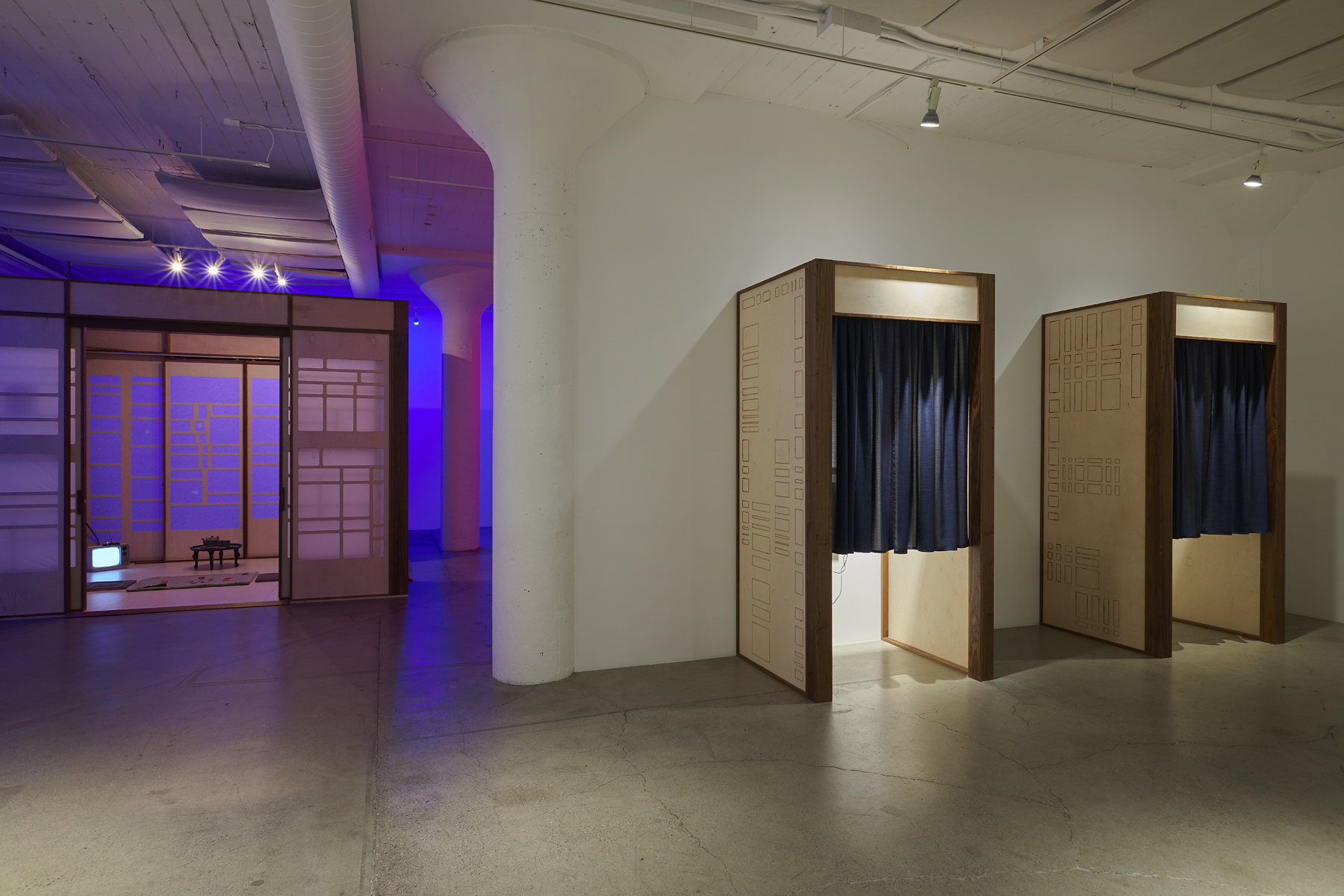
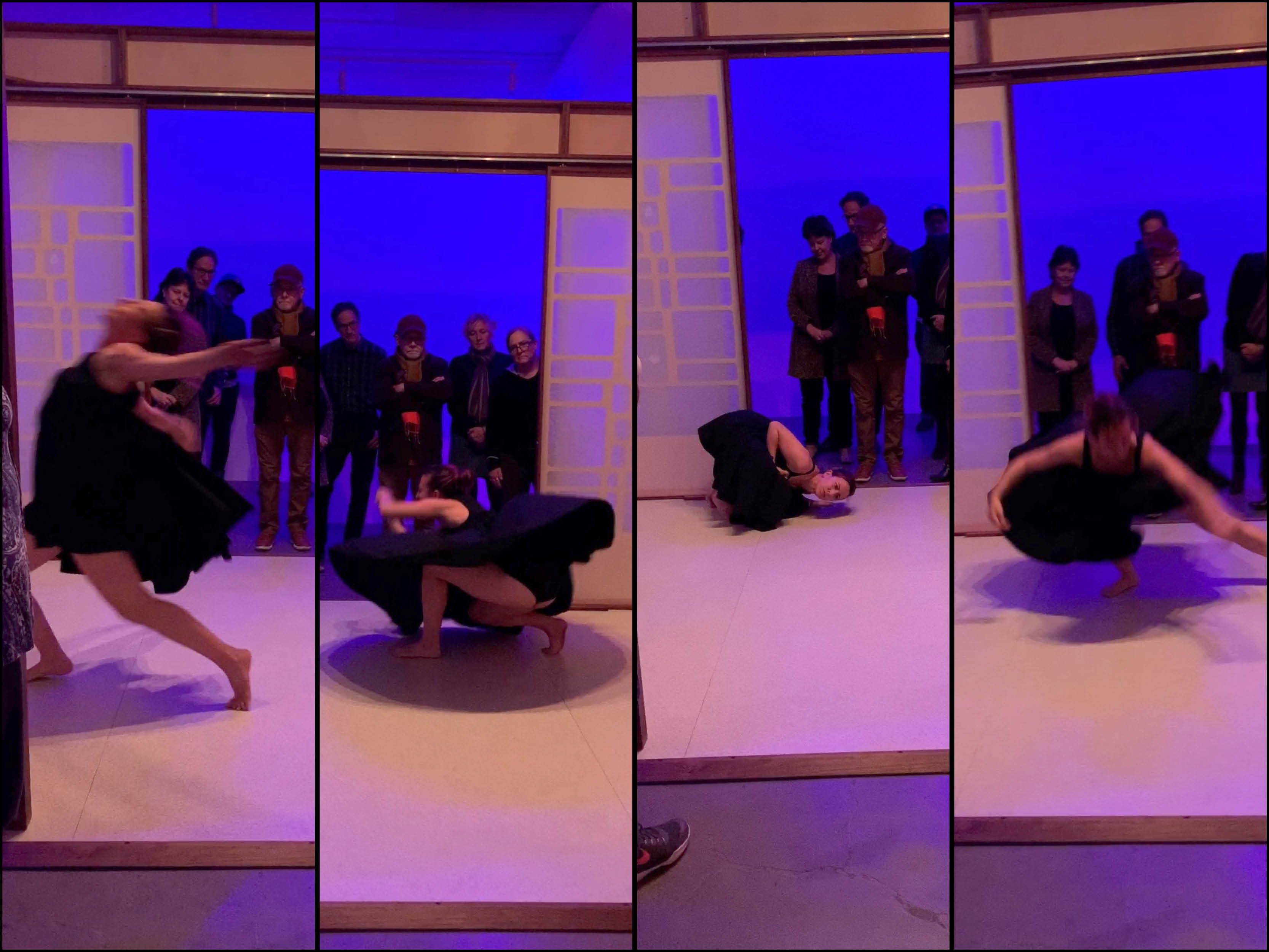
How to Fall in Love in a Brothel, a show created collaboratively with Ellen Sebastian Chang and Sunhui Chang, was commissioned by Catharine Clark Gallery for 2019’s Box Blur, an annual initiative that brings visual and performing art into dialogue. The gallery installation, which showed in San Francisco from November 2 to December 21, 2019, consisted of interactive sculptures, videos, and a short film of the same title. Performance nights featured Ellen, Maya, and guest artists Daeun Jung, Odeya Nini, and Marvin K. White.
Brothel began as a written episodic script by Sunhui, of a Korean American diaspora experience that unfolds across decades. In 2018, Ellen, Maya, and Sunhui began to think through how his rich, sensory text could open a window into larger questions of how to find intimacy in an increasingly transactional world, drawing on all the collaborators’ family histories of post-war traumas from different eras,
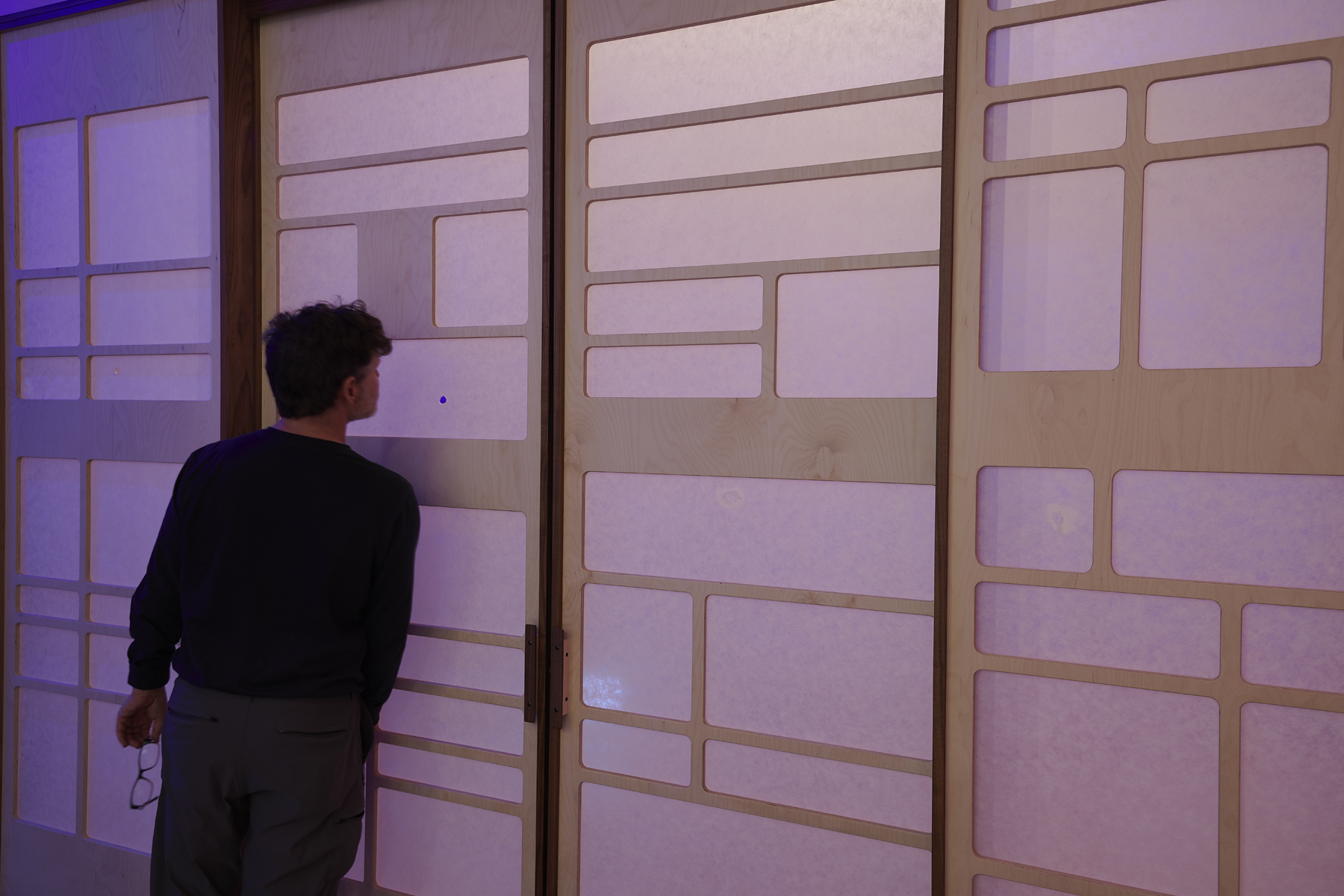
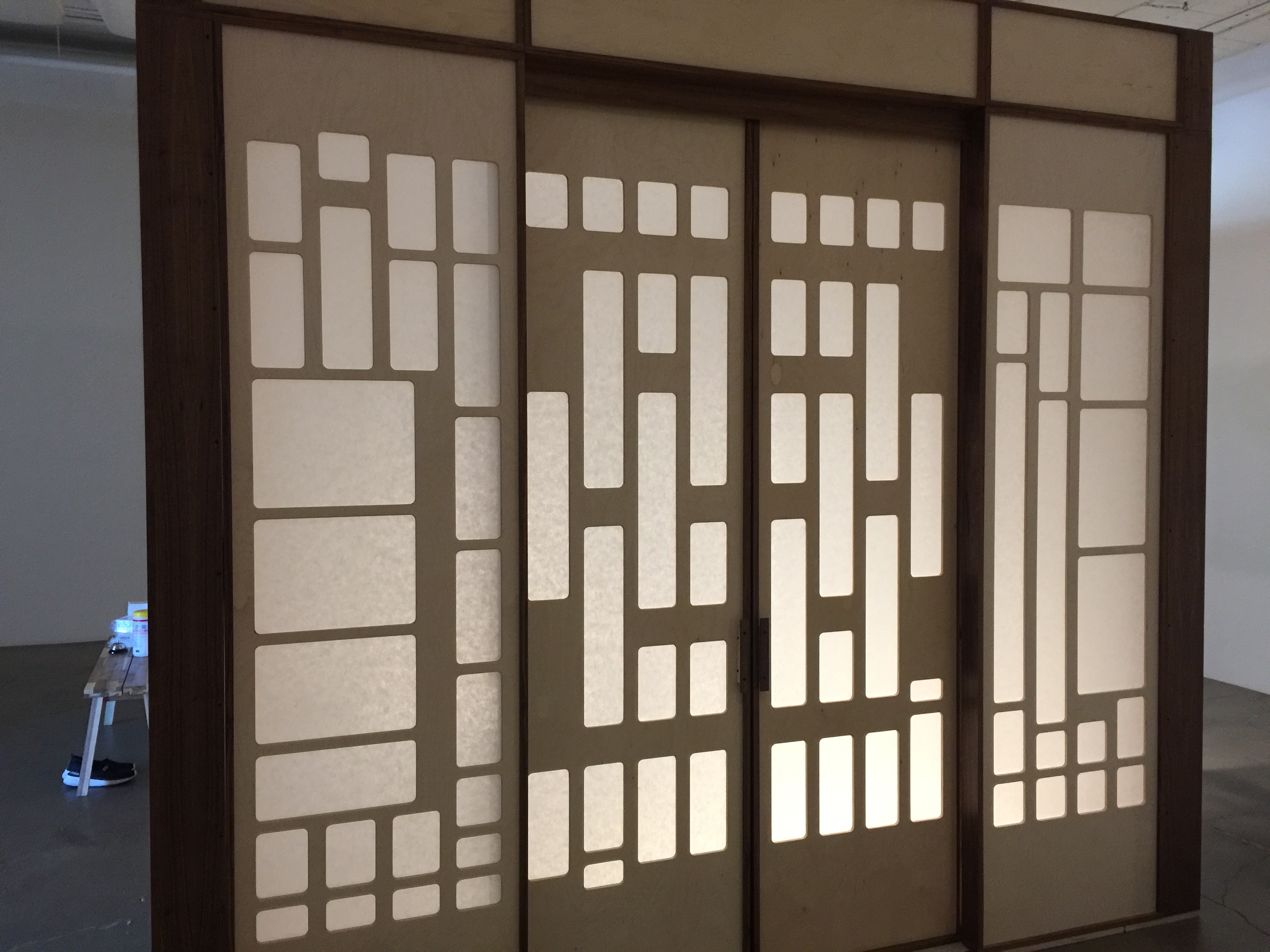
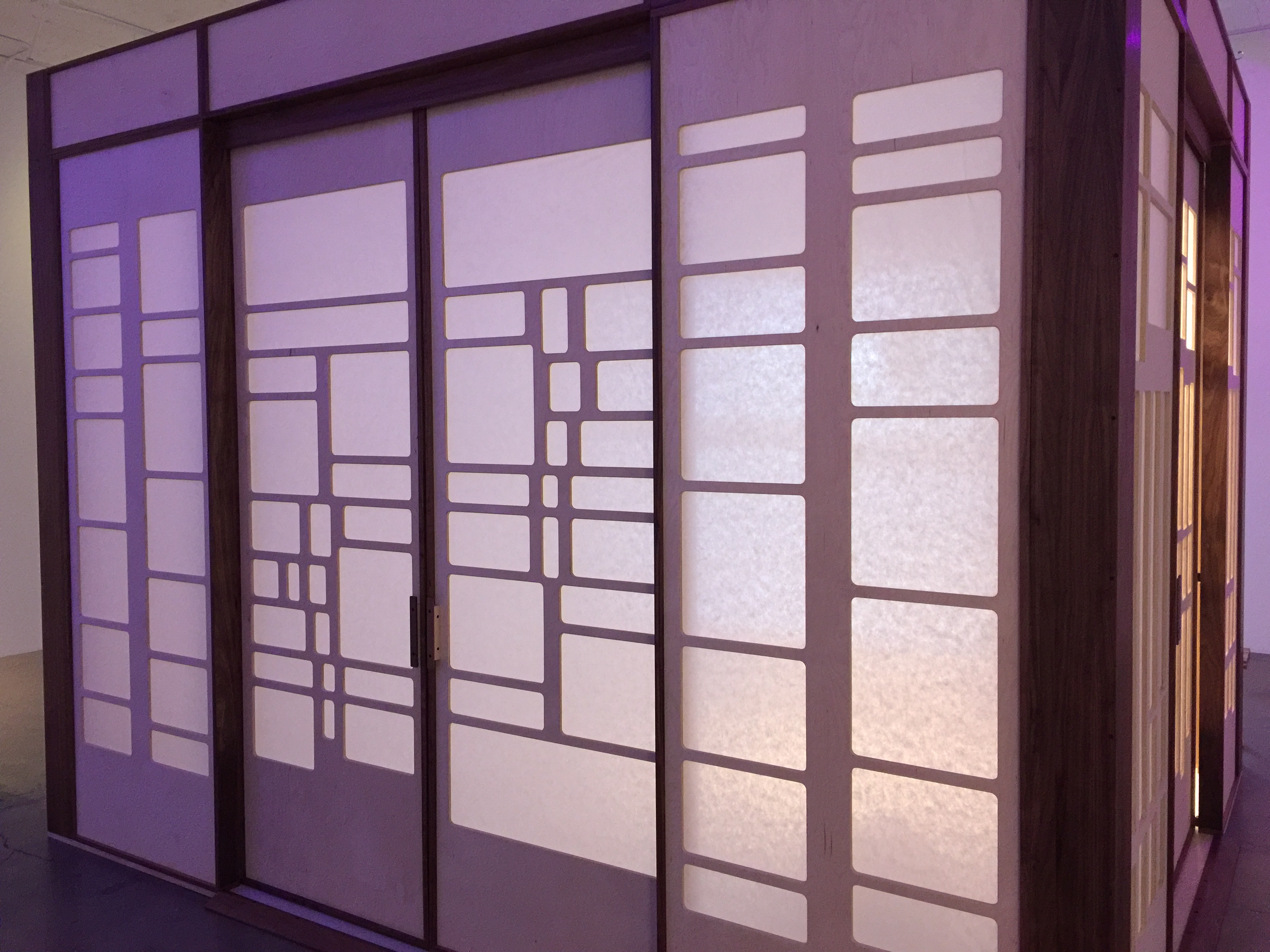
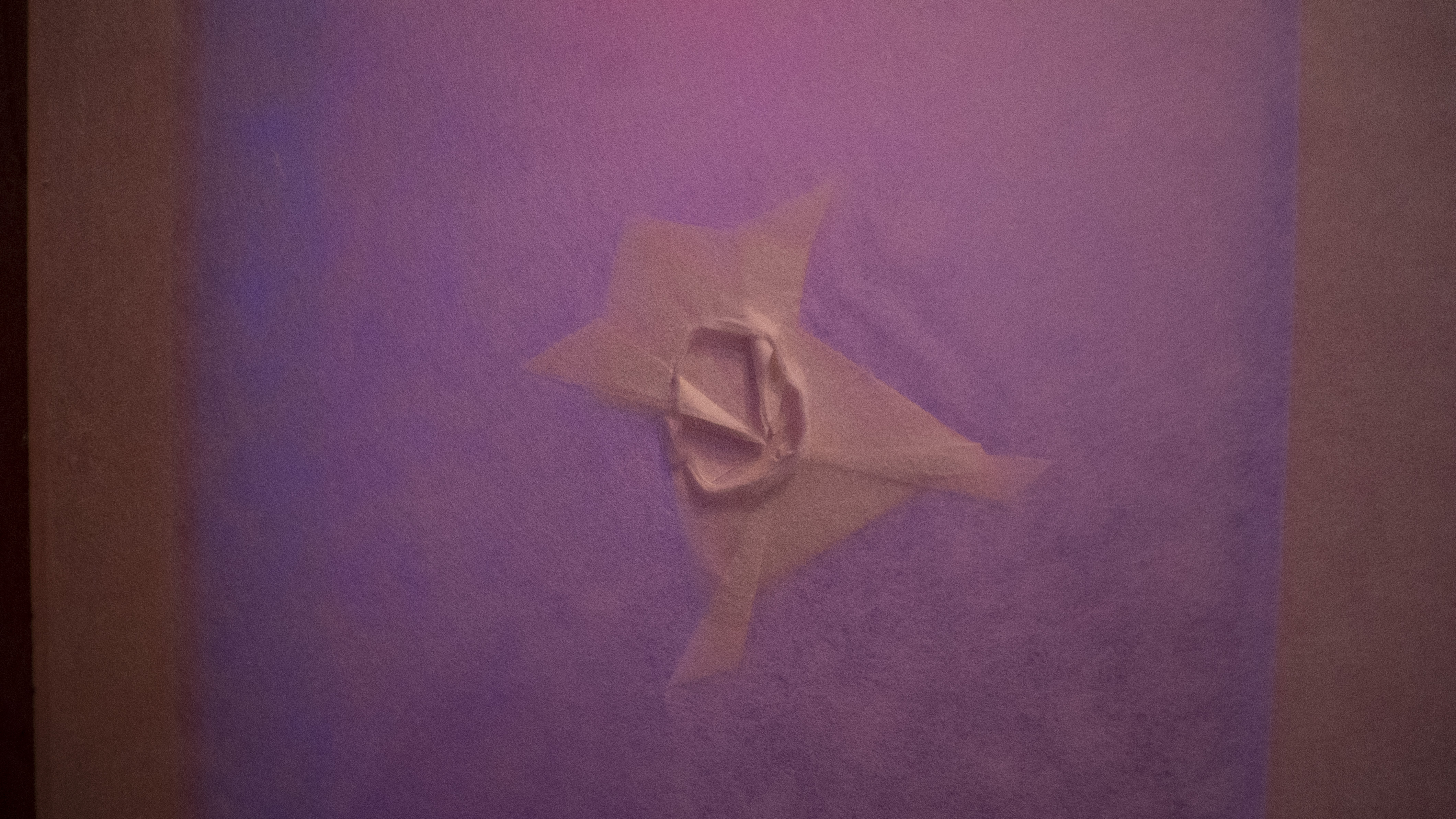
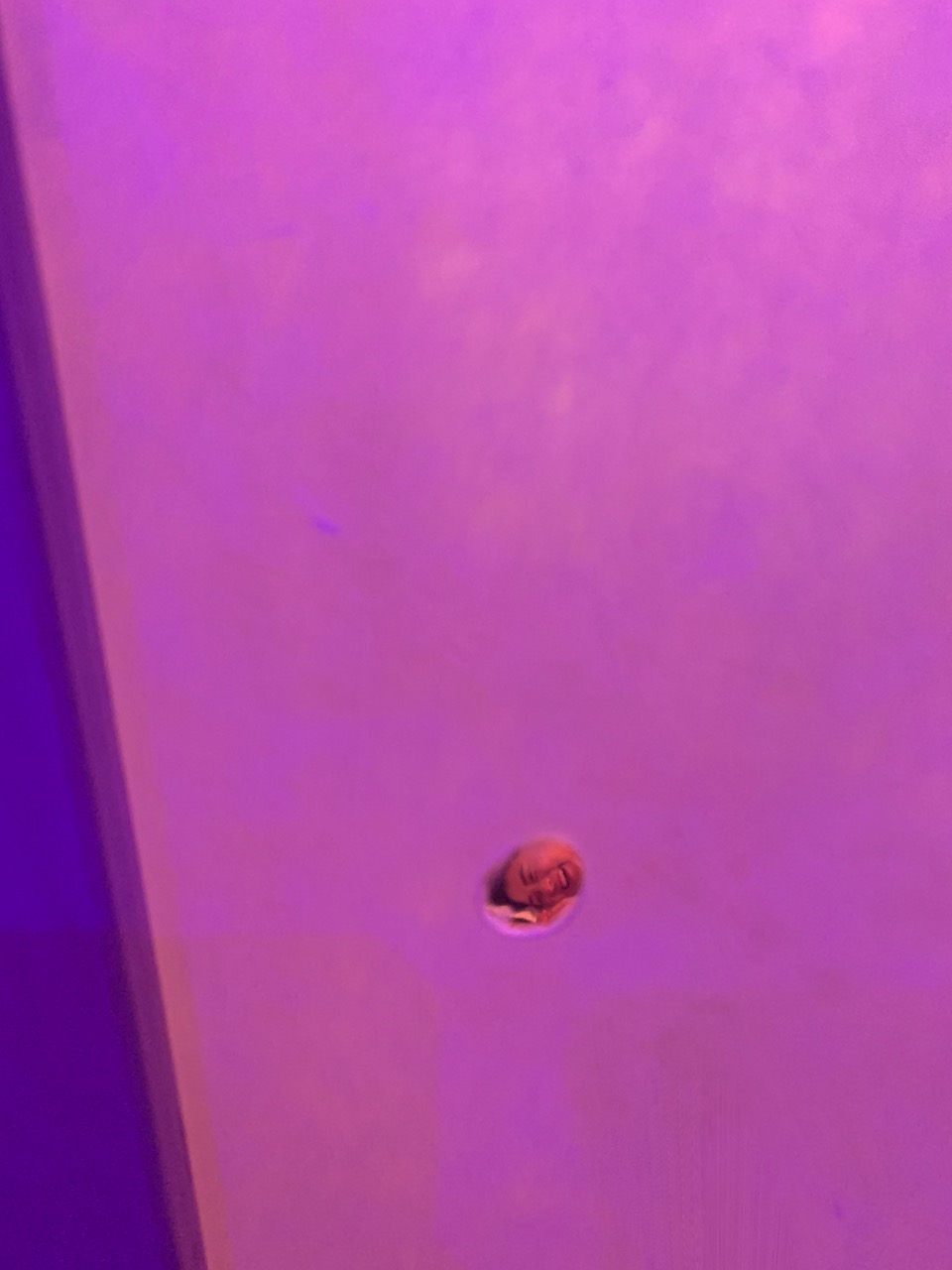
The main structure of How to Fall in Love in a Brothel is an abstracted recreation of a 1950s Korean shoji-room. With instructional video and audio pieces, viewers are taught to create peepholes in the walls, referencing a rural ritual where wedding-night consummations were quietly watched by villagers who silently rubbed a hole into the shoji with a wet finger.
In the exhibition’s immersive space, the invitation to look inside the shoji-screened room is also an invitation to witness intimate moments of conversation that are unassisted by modern technologies. Inside, viewers peer into a ritual space created by the artists, who have collaged stories and images of their secret family histories which cross the globe—from post-War South Korea to rural Mississippi, from World War II refugee camps in Kyrgyzstan, to Israel in the 1950s, and Guam in the 1970s. The stories sometimes rhyme and sometimes clash, while complicating notions of a “post-racial,” “post-cultural,” and “post-historical” identity in the 21st century. Over the course of the installation, as more holes are created in the shoji, the piece inverts itself—inside becomes outside, marks of intimacy are accreted, and watching and exchange become visible.
The installation also activates through “Intimacy Hours”, during which visitors will be invited to schedule “appointments,” in which they can occupy the shoji-room for a period of time, without access to phones or external distractions. Participants will learn/enact traditional and ritual routines of floor cleaning, preparing blankets for sleeping or pillow talk, sharing Sunhui’s banchans (kimchi and pickles), and quietly rediscovering the simple value of being on the floor, cocooned together, conversing and feeding one another.
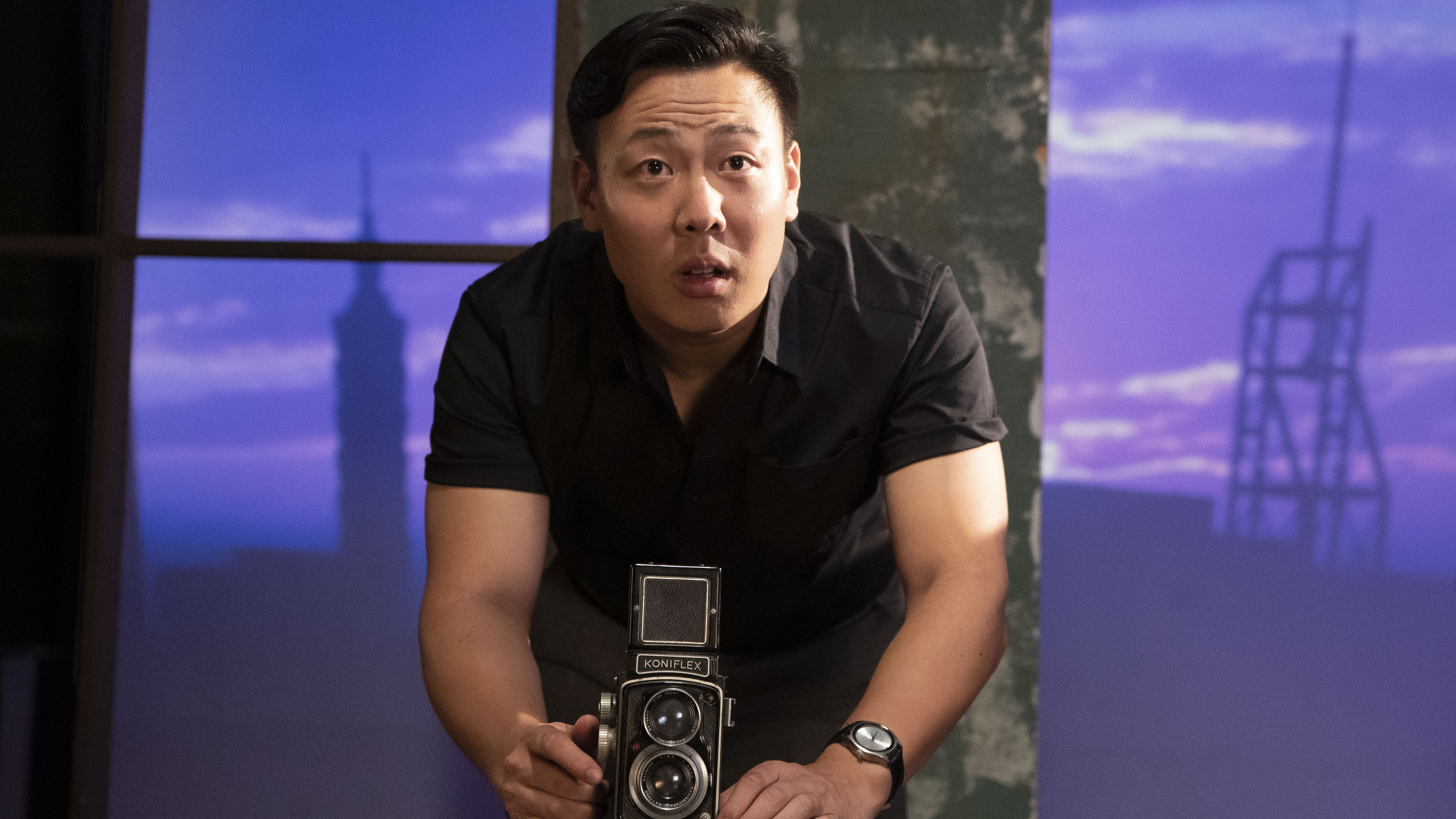
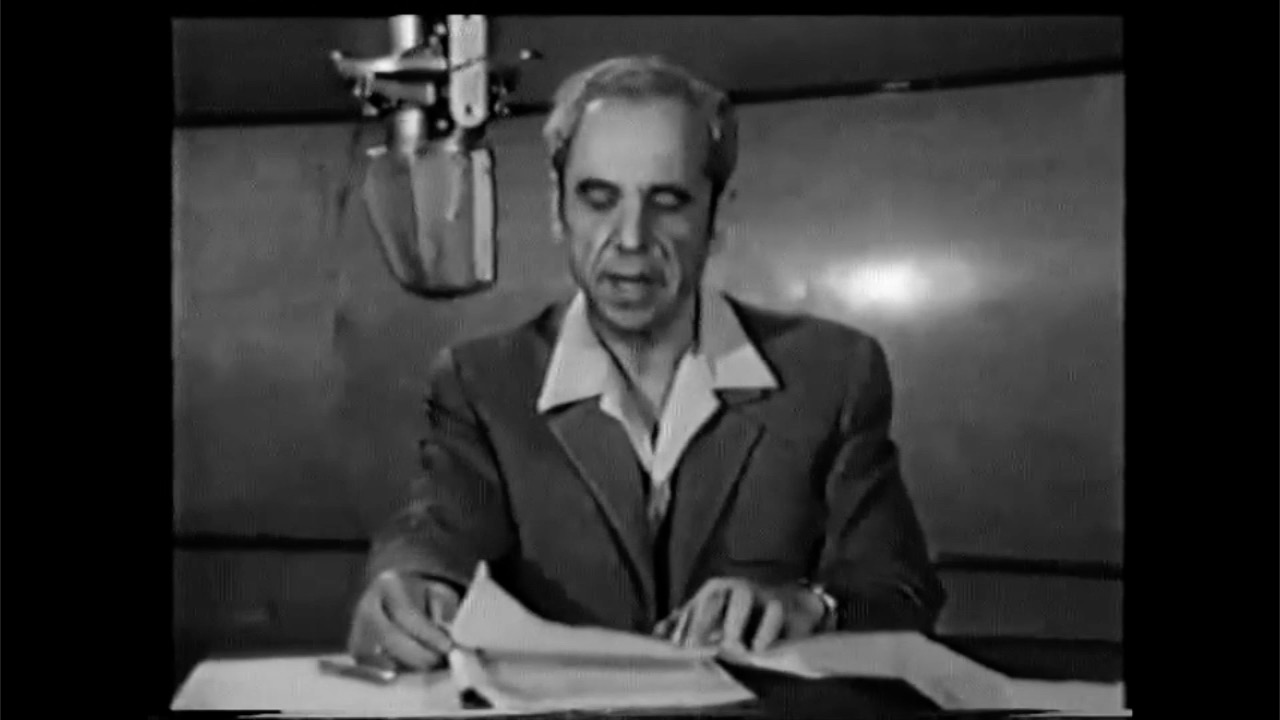
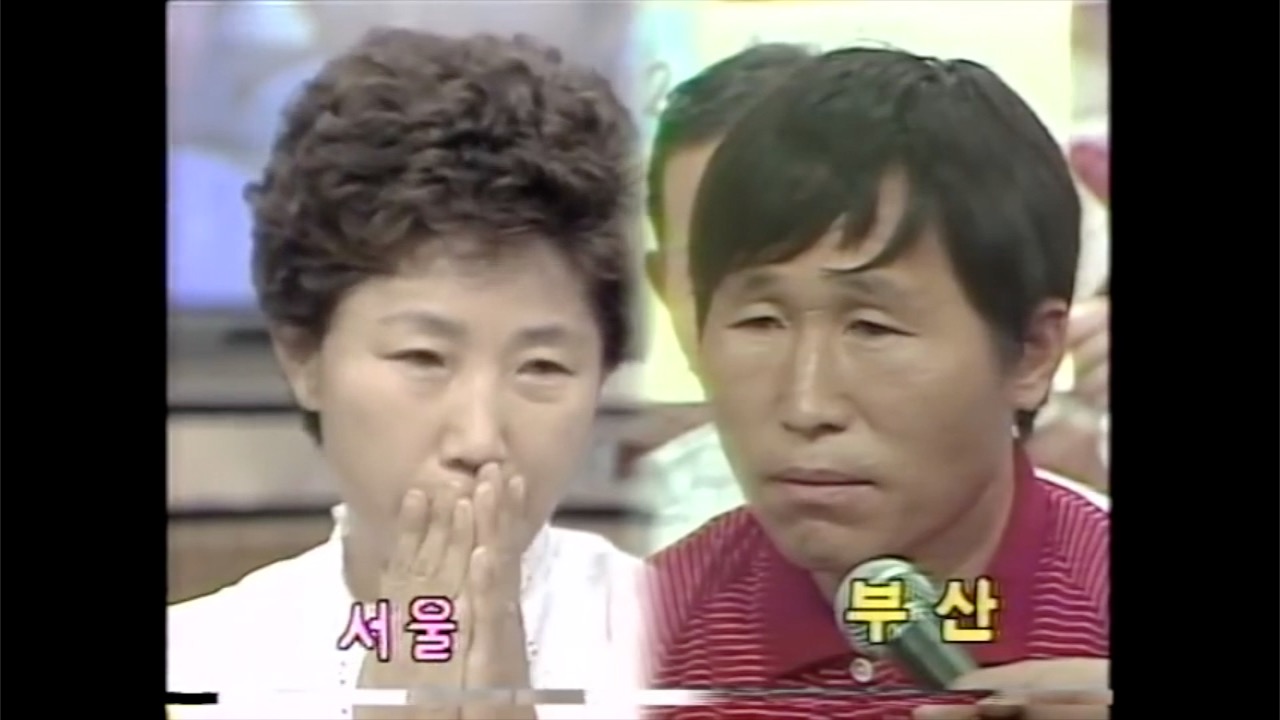
The film, written and directed by Sunhui, edited by Maya and Sunhui, and art directed by Ellen and Maya, had a triumphant run at film festivals worldwide, including Austin Arthouse Film Festival*, Burien Film Festival**, New Haven International Film Festival, LA Asian Film Festival, Madrid Film Awards, New Jersey Film Festival, Nevada City Film Festival, Red Rock Film Festival, Seattle True Independent Film Festival, Stockholm City Film Festival, Taos Shortz Film Fest, SoCal Film Awards, Kansas City FilmFest International. *Nominated Fellini Award Best Art Direction, **Nominated Best Lighting






 Maya Gurantz